

When Family History Accidentally Became Couples Therapy
It started, as many things do, with someone's grandma.
A few years ago, I was deep in the world of family storytelling. My project, MyFamilyStories, was all about helping families record their life stories — the kind of rich, personal narratives that get lost when someone passes away. We'd built an app with carefully crafted questions designed to draw out the good stuff: the pivotal moments, the hard-won wisdom, the stories people tell at funerals but really should have told at dinner.
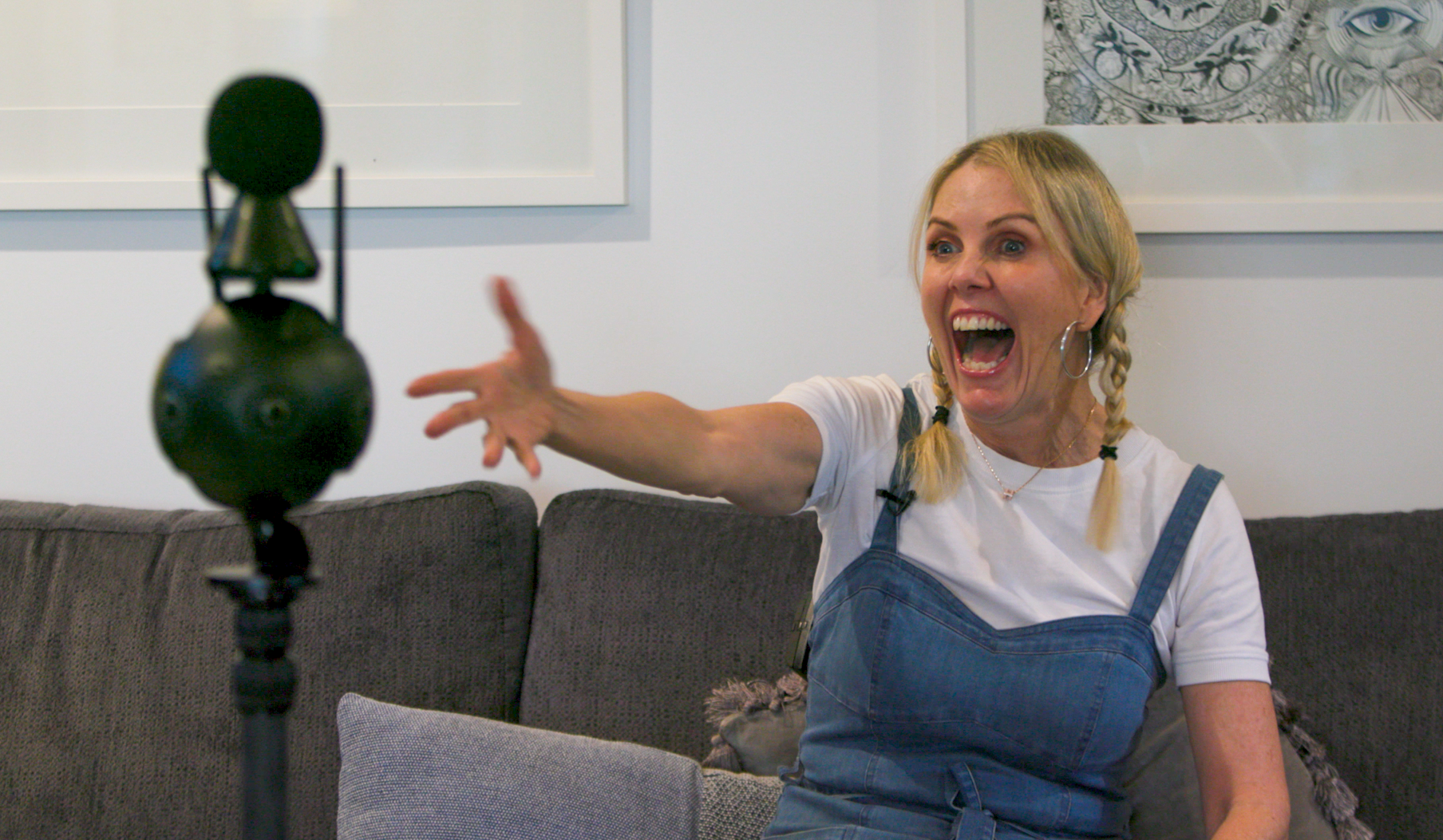
The technology was fun too. At one point we were experimenting with a 360-degree 3D VR camera, because apparently I thought the best way to record Grandma's war stories was to make the viewer feel like they were actually sitting in her living room. (It was actually pretty amazing, but that's another story.)
Then something unexpected happened.
We started noticing that when couples sat down together to answer questions about their shared history — how they met, what they'd been through, what they'd learned — something shifted. The questions we'd designed to draw out compelling family narratives were doing something else entirely. They were creating moments of genuine vulnerability between partners who'd been together for years but had somehow stopped really talking to each other.
The questions we'd designed to draw out compelling family narratives were doing something more profound than just creating insightful video content — they were creating moments of genuine connection.
I remember one session vividly. A couple in their fifties, married for over twenty years, sitting in front of our cameras. The question was something like "What's something your partner does that you've never told them you noticed?" The wife turned to her husband and said something so tender, so specific, about the way he always checked the locks twice before bed — not because he was anxious, but because she knew it was his way of saying "I'll keep you safe." He looked like a stunned mullet. Twenty-three years, and he'd never known she'd noticed.
That's when the lightbulb went off. Not the gentle, energy-efficient kind. The old-fashioned, blindingly obvious, "how-did-I-not-see-this-earlier" kind.
The Problem: "How Was Your Day, Dear?" "Fine."
Here's the thing about long-term relationships: they're brilliant at creating shared routines and absolutely terrible at maintaining shared curiosity. After a few years, most couples develop a conversational repertoire roughly the size of a Post-it note:
- "How was your day?"
- "What do you want for dinner?"
- "Did you see what [mutual friend] posted?"
- "I'm tired."
- "Me too."
Riveting stuff.
The problem isn't that couples don't want to talk about deeper things. It's that they don't know how to start. Bringing up desires, fantasies, fears, or even just "here's something I've been thinking about our relationship" feels about as natural as performing a tap dance routine at a board meeting. There's too much at stake. What if they judge me? What if it changes things? What if — horror of horrors — it leads to a Serious Conversation?
Then the email arrived.
One of our MyFamilyStories users wrote to us saying, essentially: "These questions you've made for family storytelling are incredible. But what I really need is something like this for my marriage. Not the family history stuff — the intimate stuff. The things we've been skirting around for fifteen years."
And suddenly, everything clicked. Because here's what we'd accidentally discovered through years of family storytelling work:
People will talk about almost anything if someone else brings it up first.
From Life Stories to Spicing Up Your Love Life
The connection between family storytelling and intimate relationships might seem like a stretch, but there's actually solid research backing it up. Professor Marshall Duke and Dr. Robyn Fivush at Emory University spent decades studying the power of family narratives. Their research found something remarkable:
Research Insight
Knowing your family stories is the single strongest predictor of a child's emotional health and happiness — more powerful than any other single factor the researchers measured.
— Professor Marshall Duke & Dr. Robyn Fivush, Emory University
If structured, thoughtful questions could unlock family narratives powerful enough to shape children's emotional wellbeing, what could similar questions do for intimate relationships?
We stepped back and looked at the broader landscape of conversations that matter. We identified five key areas where guided dialogue could transform relationships:
- Family history — already proven through MyFamilyStories
- Mental health and wellbeing — the conversations we avoid because they feel too heavy
- Critical thinking and values — understanding what your partner truly believes and why
- Deep philosophical questions — the big "meaning of life" stuff that bonds people in surprising ways
- Intimate relationships — desires, boundaries, fantasies, connection, pleasure
That fifth one? That's where Dive Deep Intimacy was born. And it turns out, it's the one people were most hungry for — and most terrified of.
The "Aha!" Moment That Led to "Oh My!"
When we started researching existing intimacy and relationship apps, we noticed a pattern. Most of them approached the topic with all the warmth and personality of a medical questionnaire. They'd ask things like:
Most apps ask:
"On a scale of 1-10, rate your sexual satisfaction."
Clinical. Detached. About as sexy as a tax return.
Our app asks:
"What was going through your mind the last time you couldn't stop thinking about me?"
Playful. Intriguing. Actually makes you want to answer.
See the difference? The first question makes you feel like you're at a doctor's appointment. The second makes you lean in, smile, and think about your answer. It creates curiosity. It's an invitation to be a little bit vulnerable, a little bit playful, and a lot more honest than you'd normally be over Tuesday night leftovers.
This was our breakthrough. We didn't need to create a clinical assessment tool. We needed to create the world's best conversation starter — one that happened to cover the topics couples desperately wanted to discuss but couldn't figure out how to broach.
What We Learned: Training Wheels for Your Vulnerable Side
Here's an analogy: Think of vulnerability like karaoke. Almost nobody wants to go first. Everyone thinks they'll be terrible. But once someone else gets up there and murders "Bohemian Rhapsody," suddenly the whole room wants a go. You don't need to be good at karaoke — you just need someone to go first and make it safe to be imperfect.
That's what our questions do for intimate conversations. They're the friend who gets up and sings first. And through years of testing and refining, we discovered four key principles that make this work:
Questions Are the Conversation Scapegoat
When the app asks "What's a fantasy you've never shared?", neither partner has to take the terrifying step of bringing it up themselves. You can always blame the app. "Don't look at me — the app asked!" It's a beautiful piece of social engineering.
Everyone's in the Same Boat
Both partners answer the same questions. There's no interrogator and no subject. You're both equally exposed, equally vulnerable, and equally likely to say something that surprises the other person. It's mutually assured vulnerability — and it works.
They Start Shallow and Get Deeper
You wouldn't start a swim by diving into the deep end (well, maybe you would, but that's between you and your lifeguard). Our questions are designed to warm you up. Early questions build comfort and connection. Later questions invite you into deeper territory — but by then, you've built the trust to go there.
They Give You the Words
This might be the most important one. Many people want to talk about their desires, boundaries, or relationship needs. They just don't have the vocabulary. They've never heard these topics discussed in a healthy, playful way. Our questions model the language of intimate communication, giving couples a template they can adapt and make their own.
We started calling this approach "conversation scaffolding" — providing the structure that lets people build conversations they couldn't construct on their own. The scaffold isn't the building; it's what lets you build something you didn't think you could.
From "We Never Talk" to "We Can't Stop Talking"
The response from early users blew us away. People weren't just using the app — they were having breakthroughs. Here's what some of them told us:
After 15 years together, turns out we still had an entire continent of conversation about desire we'd never explored. Who knew?
It's like having a really perceptive friend who asks exactly what you've been dying to talk about but were too chicken to bring up.
We started with the app, but now we can't stop talking. Send help. And snacks. We're missing meals.
Why Dive Deep Intimacy Is a True "Deep Dive" App
But here's where the story takes another turn. As we developed the questions, we realised that questions alone — no matter how brilliantly crafted — weren't enough. Couples needed more than conversation starters. They needed a complete toolkit for relationship growth. That's what makes Dive Deep Intimacy a true "Deep Dive" app:
Beyond Questions to Complete Education
Our questions open the door, but our educational content walks you through it. Every topic area includes expert-informed guides, practical exercises, and real-world techniques. Want to improve your communication? Here's not just a question about it — here's a complete module on active listening, conflict resolution, and expressing needs without triggering defensiveness.
Science-Backed Frameworks
We don't just throw questions at you and hope for the best. Every section of the app is built on established relationship science — from attachment theory to the psychology of desire to communication frameworks that actually work. We translate the academic research into practical, accessible tools that you can use tonight.
Stage-Based Guidance
A couple who've been together for three months has different needs than a couple celebrating their thirtieth anniversary. Our app recognises this and adapts. You tell us where you are in your journey, and we tailor the experience — the questions, the educational content, the exercises — to meet you exactly where you are.
Whole-Relationship Approach
Intimacy isn't just about the bedroom (though we've got that covered too, quite thoroughly). It's about emotional connection, intellectual stimulation, playful interaction, and shared growth. Our app addresses all of these dimensions because a truly intimate relationship needs all of them working together.
Your Relationship Deserves Better Questions (And So Much More)
So that's the story. We set out to help families record their stories. We accidentally discovered that the right questions, asked in the right way, could unlock decades of unspoken thoughts between partners. And then we built an entire relationship growth platform around that insight.
Let our app ask what you've been afraid to, and then take you on a journey that transforms your relationship from the inside out.
Because every couple deserves more than "How was your day?" "Fine." Every couple deserves questions that make them think, laugh, blush, and lean closer. Every couple deserves tools that help them grow — not just as partners, but as people who've chosen to build something extraordinary together.
Get ready to dive deep — the water's lovely once you're in, and there's a whole world to explore beneath the surface.